On-Page SEO Checklist for Marketers
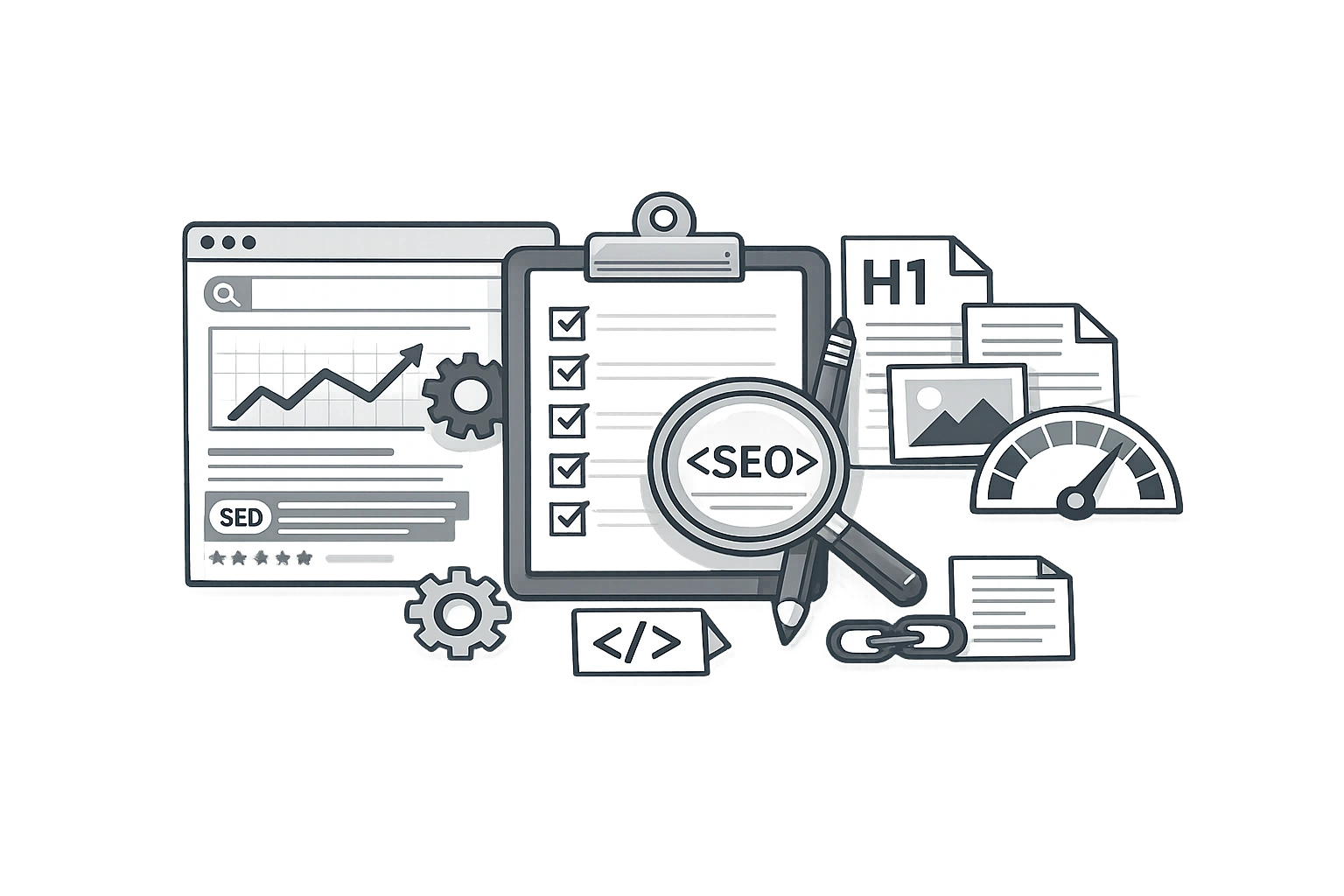
SEO in 2026 has evolved. While AI-generated content floods the web, Google has doubled down on E-E-A-T (Experience, Expertise, Authoritativeness, and Trustworthiness) and technical excellence. It is no longer enough to just "write good content." Your page's technical foundation must be flawless to even compete.
On-page SEO is the practice of optimising individual web pages to rank higher and earn more relevant traffic. Unlike off-page SEO (backlinks), on-page factors are 100% within your control. This checklist covers the technical and structural elements you must optimise for every page you publish.
PART 1: Title Tags & Meta Tags
The Title Tag remains one of the strongest ranking signals.
- Formula: Primary Keyword | Secondary Keyword/Modifier | Brand Name
- Length: Keep it under 60 characters to prevent truncation in SERPs.
- Unique: Every page must have a unique title. Duplicate titles confuse search engines.
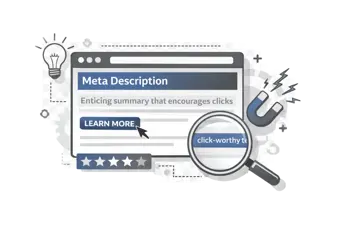
The Meta Description does not directly impact rankings, but it massively impacts Click-Through Rate (CTR). Treat it as ad copy. Include a call to action and your primary keyword (which gets bolded in search results).
Tool Tip: Generate perfect tags with our Meta Tag Generator, which previews how they look in Google.
PART 2: URL Structure & Slugs
URLs should be short, descriptive, and clean.
- Use Hyphens:
/seo-checklist-2026(Good) vs/seo_checklist_2026(Bad). Google reads hyphens as spaces. - Lowercase Only: Servers can treat
/Page/pageas different URLs, causing duplicate content issues. Always force lowercase. - Remove Stop Words: Strip words like "and", "the", and "of" to keep URLs short.
Use our Slug Generator to create clean, SEO-friendly URL slugs instantly. Learn more about URL Slugs Best Practices.
PART 3: Heading Hierarchy (H1-H6)
Headings give your content structure.
- H1: Only ONE per page. This is usually the page title. It must contain the primary keyword.
- H2: Main sections of the article.
- H3: Sub-sections within H2 tags.
Structure helps Google understand the hierarchy and importance of your content topics.
PART 4: Content Optimisation
Keyword Placement: Include your target keyword in the first 100 words. This signals relevance early to both users and bots.
Readability: Use short paragraphs (2-3 sentences). Break up text with bullet points.
Semantic Keywords: Use LSI (Latent Semantic Indexing) terms. If writing about "Apple," include words like "iPhone," "Mac," or "fruit", so Google knows which Apple you mean.
PART 5: Image SEO
Images are often ignored but are crucial for image search traffic.
- Alt Text: Describe the image.
- File Name:
keyword-description.jpg - File Size: Compress images to improve load speed. +- Content Length: Ensure your page has sufficient word count for the topic. Check your Word & Character Count for SEO.
Refer to our Image Optimisation Guide for the full workflow.
PART 6: Internal Linking
Internal links connect your content and pass "link juice" (authority) around your site.
- Anchor Text: Use descriptive anchors (e.g., "download our SEO checklist") rather than generic ones ("click here").
- Orphan Pages: Ensure every page has at least one internal link pointing to it.
- Hub & Spoke: Link your "Cluster" articles back to your main "Pillar" page.
PART 7: Schema Markup & Structured Data
Schema is code that helps search engines understand your content better and can produce "Rich Results" (stars, FAQs, recipes) in SERPs.
Must-Have Schema for Marketers:
- Article/BlogPosting: For blog posts.
- FAQPage: If your page has an FAQ section, this helps you get more real estate in search results.
- Product: For e-commerce pages.
- Organisation/LocalBusiness: For the homepage and contact pages.
Always validate your JSON-LD code using our JSON Validator to ensure there are no syntax errors.
PART 8: Page Speed & Core Web Vitals
Speed is a confirmed ranking factor.
- LCP (Largest Contentful Paint): The main content should load within 2.5 seconds.
- CLS (Cumulative Layout Shift): Elements shouldn't jump around as the page loads.
Compressing images and removing unused HTML/CSS are the quickest wins here.
The Master On-Page SEO Checklist
| 🔲 | Primary keyword in Title Tag? |
|---|---|
| 🔲 | Primary keyword in H1? |
| 🔲 | Meta Description written with CTA? |
| 🔲 | URL is short, lowercase, hyphenated? |
| 🔲 | Are images compressed and have Alt Text? |
| 🔲 | Internal links added (3-5 per post)? |
| 🔲 | Schema markup implemented? |
| 🔲 | Does the page pass the Mobile-Friendly test? |
Frequently Asked Questions
Q: What is the most important on-page SEO factor?
The Title Tag and H1 header contain the primary keyword, along with high-quality, relevant content that matches search intent.
Q: How long should a blog post be?
There is no magic number. It should be as long as necessary to fully answer the user's query. However, comprehensive guides often run 1,500+ words.
Conclusion
On-page SEO is iterative. Use this checklist every time you publish to ensure your content has the best possible chance of ranking. Start by optimising your Title Tags and Headings, as these move the needle fastest.
Share this article
Help other marketers, developers, and creators discover these insights.